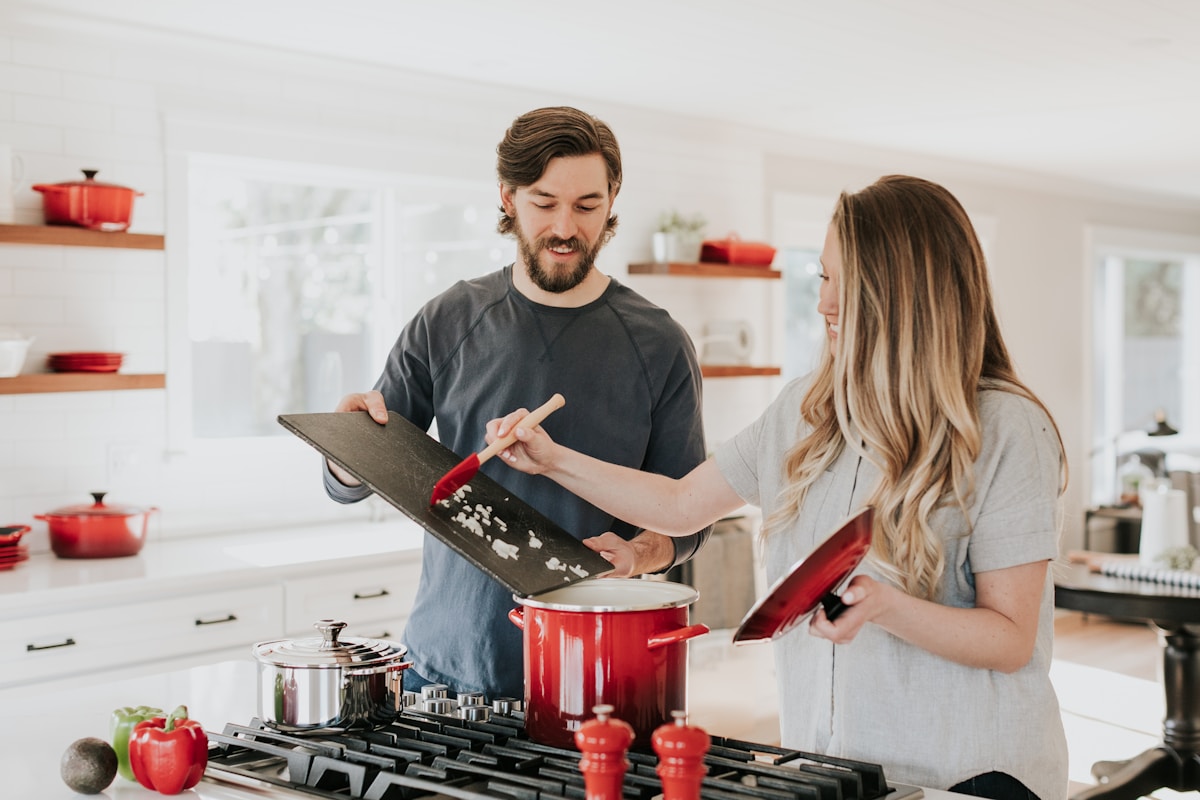
Mindful Cooking: Turning Kitchen Time into Meditation
In this article: How to turn daily cooking into a mindful meditation practice, with concrete techniques, the science behind it, and why it might be the most accessible meditation of all.
If you cook dinner most nights, you spend somewhere between 150 and 300 hours a year in the kitchen. That is more time than most people will ever spend on a meditation cushion. The question is whether those hours are dead time, half-watched through a phone screen while you wait for water to boil, or whether they can become something more. The answer, with a small shift in attention, is that they absolutely can.
Mindful cooking is the practice of bringing full, present attention to the act of preparing food. It treats chopping onions, stirring soup, and washing dishes not as chores to rush through but as anchors for awareness, much like the breath in formal meditation. The kitchen becomes a practice room. And unlike many meditation practices, it requires no extra time, no special equipment, and no schedule. You already have to cook. You might as well get the meditative benefit for free.
I learned this almost by accident. At the temple in China where I studied, kitchen duty, called xingtang in Chan monasteries, was considered as sacred as meditation itself. The cooks were often senior monks, and the discipline of preparing food in silence with full attention was treated as a serious spiritual exercise. When I returned home and found myself anxious about finding time to meditate in a busy life, the kitchen was where the practice quietly continued. Let me show you how it works.
What Makes Cooking a Mindfulness Practice
The reason cooking is such a natural fit for mindfulness is that it engages all five senses and demands continuous, concrete attention. Boiling water will boil over if you do not watch it. A knife will cut you if your mind is elsewhere. The smell of garlic tells you when it is ready. The sizzle of oil tells you when to add the next ingredient.
This sensory richness is exactly what meditation is trying to train: sustained, present-moment awareness. The difference is that on a cushion, you are trying to generate this awareness with nothing but the breath. In the kitchen, the environment hands it to you on every side. For this reason, mindful cooking is often a better entry point for beginners than formal sitting. It is mindful eating extended backward in time, into the making.
The benefits go beyond meditation practice. A 2023 study in the journal Health Education & Behavior found that people who cooked mindfully reported significantly lower stress and greater emotional wellbeing than those who cooked while distracted. Mindful cooking is also associated with healthier eating, because attention to taste and satiety tends to reduce overeating and improve food choices. The kitchen turns out to be one of the best leverage points in a mindful life.
How to Practice Mindful Cooking
The shift from autopilot cooking to mindful cooking is mostly a shift of attention. The actual cooking does not change. Here is how to do it.
1. Slow down by 10 percent. The single biggest obstacle is rushing. Most of us cook at a pace driven by hunger and impatience. Simply slowing every movement slightly creates the space needed to actually notice what you are doing. The meal will still get done.
2. Engage the senses deliberately. Before you start, take ten seconds to look at the ingredients. Notice colors, textures, smells. As you cook, keep returning to sensory detail: the sound of sizzling, the change in color of vegetables, the smell building in the pan.
3. Bring attention to the hands. The hands are doing almost all the work of cooking. Bring continuous gentle attention to what they feel: the weight of the knife, the resistance of a carrot, the heat of a handle. This is the same principle as breath awareness meditation, but with the hands as the anchor.
4. Cook in silence when possible. Background podcasts and music pull attention away from the present. Try cooking one meal a week in silence, with no audio. The effect is striking. Even better, treat the kitchen as a screen-free zone. Pair this with our guide to digital mindfulness for a larger shift.
5. Notice the impulses. Watch the mind that wants to grab the phone, plan tomorrow, or rehearse an argument. Each time you notice and return to the onion you are chopping, that is one rep of mindfulness. Repetition is what builds the skill.
6. Treat cleaning as part of the practice. The pot that needs scrubbing, the counter that needs wiping, are not interruptions. They are continuation. In Zen monasteries, cleaning up is treated with exactly the same reverence as cooking. A clean kitchen at the end is part of the meditation.
Specific Anchors to Use
Different parts of cooking make good attention anchors. Pick whichever fits the moment.
Chopping. The rhythmic sound of the knife, the changing shape of the ingredient, the feel of resistance through the cutting board. Chopping is one of the most naturally meditative kitchen activities because the rhythm is steady and the task demands just enough attention to occupy the mind.
Stirring. The slow circle of a spoon through soup or batter. Notice the resistance, the heat rising, the small sounds. Stirring has been used as a meditation in monasteries for centuries precisely because the repetitive motion calms the mind.
Smell. Watch the smell of a dish develop and change as ingredients cook. Smell is the most underused sense in meditation and the most emotionally powerful. Following the smell of cooking food can carry you into the present faster than almost anything else.
Tasting. Each time you taste to adjust seasoning, do it with full attention rather than habit. Notice the layers of flavor, the texture, the temperature. This is the bridge between mindful cooking and mindful eating.
Practical Tips for Real Life
Mindful cooking sounds lovely in theory, but real kitchens are messy. A few practical notes help.
You do not need to cook everything mindfully. Pick one meal or one task, like chopping vegetables or washing dishes, and do that mindfully. Let the rest be ordinary. Trying to be mindful of a complex five-dish dinner under time pressure usually fails.
The biggest enemy is the phone. A single notification can pull you out of attention for ten minutes. Put the phone in another room before you start cooking.
Cook simple things when you want depth. Elaborate recipes with many steps demand cognitive attention, which crowds out mindfulness. A pot of rice, a stir-fry, a loaf of bread baked by hand, these are ideal.
Make it daily. Twenty minutes of mindful cooking six nights a week gives you two hours of meditation folded into time you would have spent anyway. Over a year, that is more practice than most retreats.
Common Questions / FAQ
Q: Do I have to cook from scratch to practice mindful cooking?
A: No. Even heating soup or making toast can be done mindfully. The practice is the attention, not the recipe.
Q: Is mindful cooking really meditation, or just paying attention?
A: In the Buddhist tradition, they are not separate. Mindfulness is attention to present experience without judgment, and cooking is a perfectly valid place to cultivate it.
Q: What if I hate cooking?
A: Mindful cooking can shift the experience surprisingly. Many people who dislike cooking dislike the rushing and distraction around it, not the cooking itself. Slowing down often makes it pleasant.
Q: Can I cook mindfully with kids around?
A: Yes, with adjustment. Cooking with children can itself be a mindful activity if you slow to their pace and give them small tasks.
The Bottom Line
Mindful cooking turns one of the most universal daily activities into a meditation practice that costs no extra time. By slowing slightly, engaging the senses, and keeping attention on the hands and the food, the kitchen becomes a training ground for presence. It is often the most accessible form of mindfulness for busy people and, over a year, can deliver more total practice time than any formal sitting. The next time you cook a meal, try giving it your full attention and notice how the ordinary becomes quietly extraordinary.
This article is for educational purposes only and is not a substitute for professional mental health treatment.
Leave a Reply